1What is Cashless Health Insurance?
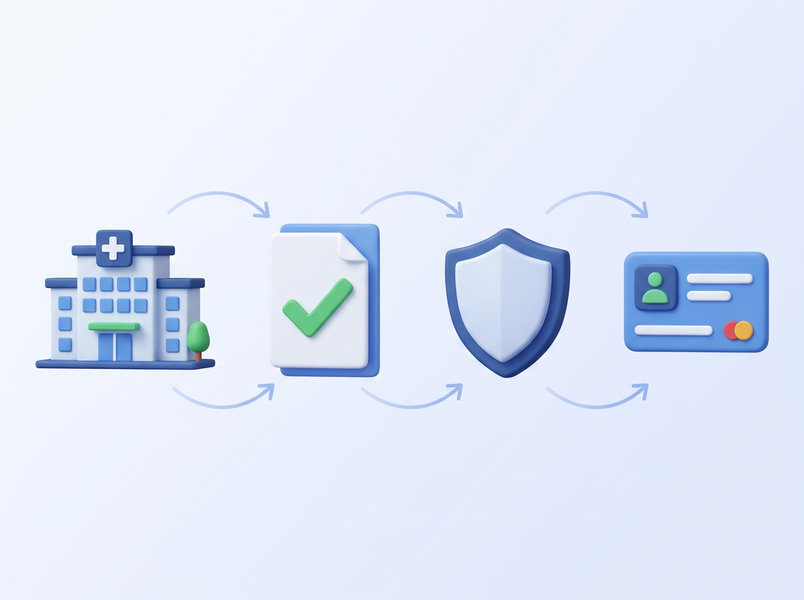
Cashless health insurance is a facility where the insurance company directly settles the medical bills with the hospital. This means the policyholder does not have to pay the hospitalisation expenses out of their own pocket at the time of treatment, provided it's a network hospital.
2How Cashless Claims Work
The process typically involves notifying the insurer or the TPA (Third Party Administrator) at the hospital's insurance desk. You fill out a pre-authorization form, which the hospital sends to the insurer. Once approved, the treatment proceeds without you having to worry about the major bills.
3Network Hospitals Matter
Cashless facilities are only available at hospitals that have a tie-up with your insurance provider. These are called "Network Hospitals." It is crucial to choose an insurer with a wide and accessible network of quality hospitals in your city.
4Pre-authorization Requirement
Before the insurer agrees to pay, they must "pre-authorize" the treatment. For planned surgeries, this should be done 2-3 days in advance. For emergencies, it must be done within 24 hours of admission.
5Coverage Scope
While the insurer pays the hospital, they only cover expenses that are part of your policy. This usually includes:
- Room rent and boarding
- Doctor and surgeon fees
- Nursing charges
- OT charges and medicines
6Common Exclusions
Not everything is "cashless." You will still have to pay for "non-medical items" or "consumables" like gloves, masks, nebulizer kits, and administrative charges. These are typically excluded from most standard health insurance plans.
7Planned vs Emergency Hospitalisation
In planned hospitalisation, you have time to get approvals and verify network status. In an emergency, the priority is treatment. Most hospitals will start treatment while the pre-authorization is being processed, but you might need to pay a small security deposit.
8Claim Rejection Reasons
Cashless requests can be rejected if the hospital is not in the network, if the ailment is not covered (waiting periods), or if the information provided is insufficient. Rejection of "cashless" doesn't always mean rejection of the "claim"—you can still apply for reimbursement later.
9Documents Required
Even for cashless, you need your health card or policy number, a valid photo ID (Aadhar/PAN), and all medical reports related to the current ailment.
10Cashless vs Reimbursement
Cashless is more convenient as it requires no large upfront payment. Reimbursement is used when you get treated at a non-network hospital; you pay the bills first and then claim the money back from the insurer.
Need help understanding cashless claims?
Our experts guide you through policy selection and claim process.