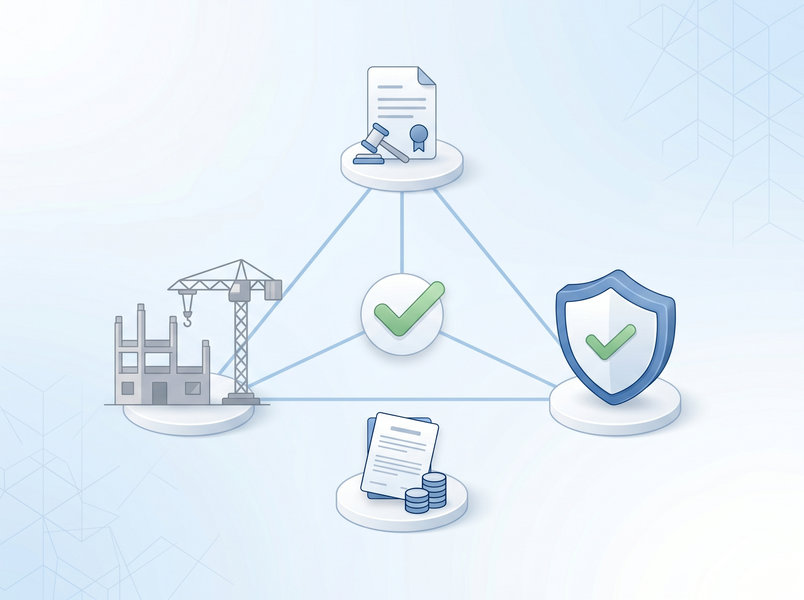
What is an Insurance Security Bond?
An insurance security bond is a tripartite agreement where an insurance company provides a guarantee to a project owner (the obligee) on behalf of a contractor (the principal). In simple terms, it ensures that the contractor will fulfill their obligations as per the tender or contract terms.
In the Indian infrastructure and corporate landscape, these bonds are increasingly being used as a viable alternative to traditional Bank Guarantees (BGs). They act as a form of financial assurance, protecting the project owner from potential losses if the contractor fails to meet their commitments.
Why Security Bonds Are Important in Tender Projects
For many government and large-scale private tender projects in India, providing a security bond is now a mandatory requirement. Beyond mere compliance, these bonds help businesses build significant credibility with project owners, signaling that a reputable insurer has vetted their financial and operational capacity.
One of the biggest advantages is the reduction of financial burden. Unlike bank guarantees, which often require 100% cash collateral or freeze your credit limits, insurance bonds are typically issued based on a premium payment, freeing up your working capital for project execution.
Types of Bonds Used in Tender Projects
Depending on the stage of the project, different types of insurance security bonds may be required:
- Bid Bond: Submitted along with the tender proposal to ensure the bidder will enter into the contract if awarded.
- Performance Bond: Guarantees that the contractor will complete the project according to the specified quality and timelines.
- Advance Payment Bond: Protects the project owner's advance payments made to the contractor for mobilization or materials.

Key Eligibility Criteria for Getting a Bond
Insurers conduct a thorough assessment before issuing a bond. The primary focus is on your business's financial stability and past project experience. They look for a proven track record of successfully completing similar projects within the stipulated time and budget.
Your balance sheet strength and turnover requirements are also scrutinized. Insurers need to be confident that your business has the liquidity and net worth to handle the project's scale and any potential liabilities that may arise during the contract period.
Common Mistakes Businesses Make
Many businesses fail to secure bonds due to simple oversights. Choosing the wrong insurer who lacks experience in specific project categories is a common pitfall. Similarly, not fully understanding the bond terms or ignoring specific claim conditions can lead to disputes later on.
Delays in documentation are another major hurdle. Tender deadlines are strict, and failing to provide audited financials or project completion certificates in a timely manner can result in disqualification from the bidding process altogether.
Checklist Before Applying
- Tender document thoroughly reviewed
- Specific bond type correctly identified
- Last 3 years audited financials ready
- Project completion certificates compiled
- Reputed insurer shortlisted
- Tender submission timelines checked
How CKP Insurance Helps You Secure Tender Bonds Smoothly
At CKP Insurance, we take an advisory-first approach to corporate bonding. We don't just process applications; we help you understand the requirements and position your business for success.
Need help with a tender bond?
Get expert guidance to secure the right insurance bond without delays. Our team ensures your documentation is perfect for a successful bid.