
1Sum Insured
The maximum amount your insurer will pay in a policy year. Think of it as the "limit" of your coverage. If your medical bills exceed this amount, you will have to pay the difference yourself.
2Premium
The amount you pay (usually annually) to keep your insurance policy active. It's like a subscription fee for your protection. If you stop paying the premium, your policy will lapse and you won't be covered.
3Deductible
The fixed amount you must pay out of your own pocket before the insurance company starts paying for your medical expenses.
- Helps lower your premium
- Common in top-up plans
- Paid once per policy year or per claim
4Co-payment
A fixed percentage of the total claim amount that you agree to pay. For example, if you have a 10% co-pay and your bill is ₹1,00,000, you pay ₹10,000 and the insurer pays ₹90,000.
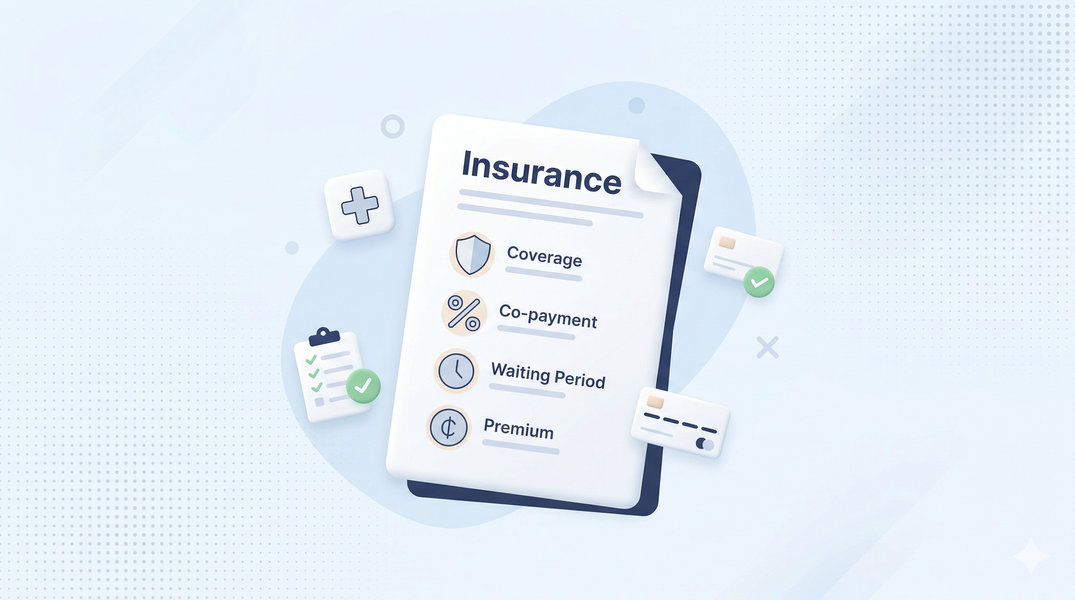
5Waiting Period
The time period during which you cannot claim certain benefits. This typically applies to pre-existing diseases (2-4 years), specific ailments (2 years), or maternity (2-4 years).
6Pre-existing Disease (PED)
Any health condition or ailment that you already had before buying the insurance policy. It is crucial to declare these honestly to avoid claim rejection later.
7Cashless Claim
A facility where the insurer directly settles the bills with the hospital. You don't have to pay upfront, provided you get treated at a "Network Hospital."
8Reimbursement Claim
When you pay the hospital bills yourself first and then submit the documents to the insurer to get your money back. This usually happens at non-network hospitals.
9Network Hospitals
Hospitals that have a tie-up with your insurance company to provide cashless treatment. Always check the network list before planning a hospitalisation.
10Policy Exclusions
Specific conditions, treatments, or items that are NOT covered by your insurance policy. Common exclusions include cosmetic surgery, non-medical expenses (consumables), and self-inflicted injuries.
11Claim Settlement Ratio (CSR)
The percentage of claims an insurer has settled compared to the total claims received. A higher ratio often indicates a more reliable insurer.
Still confused about insurance terms?
Our advisors simplify policies so you can make informed decisions.